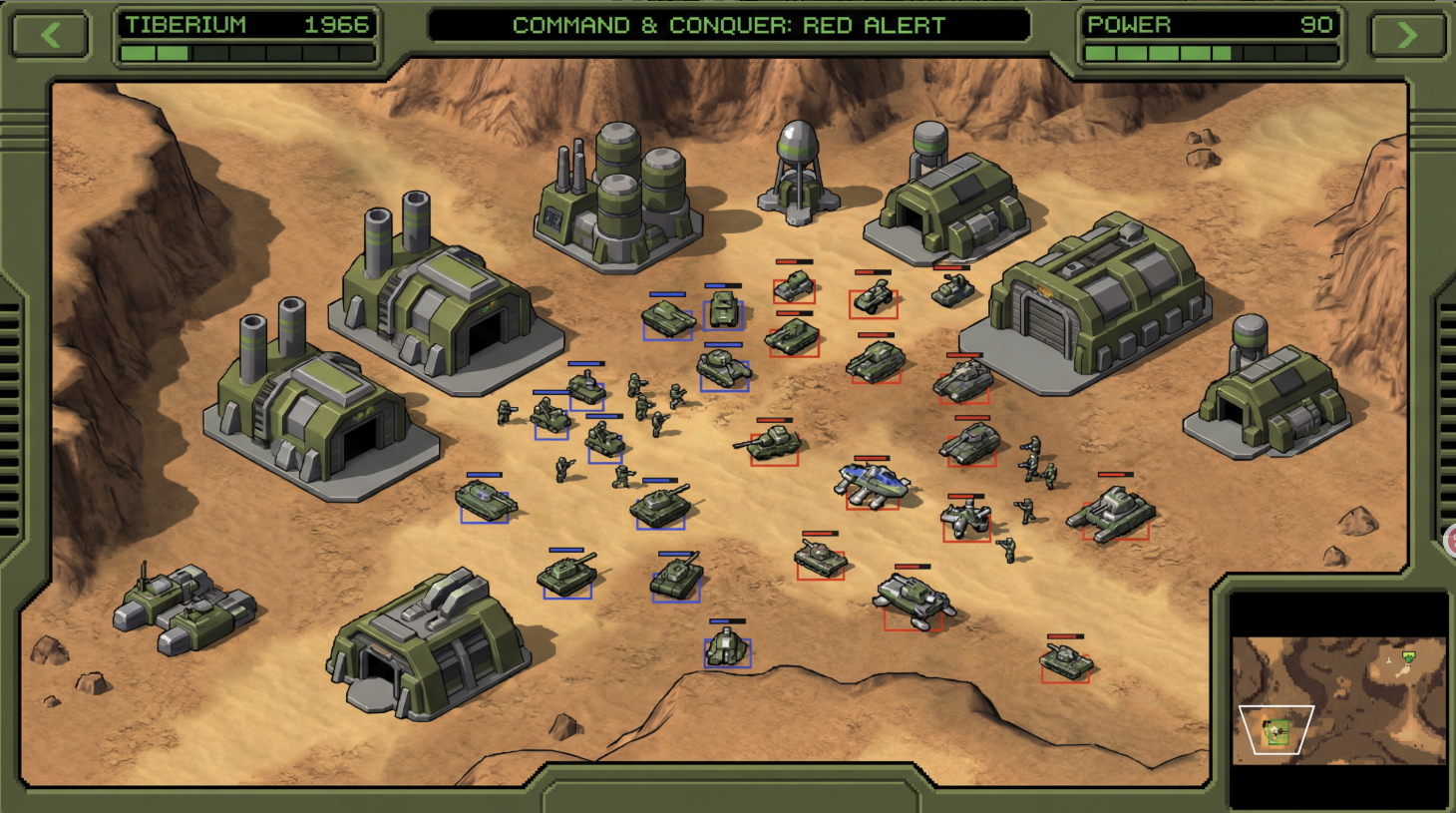
Executive Summary
Feasibility Rating:
- Cost Reduction: 70-80% vs traditional development
- Time Savings: 50-60% faster to prototype
- Quality Trade-off: 10-20% below AAA standards (refinable)
- Best For: Indie developers, MVPs, rapid prototyping
- Not Recommended For: AAA commercial releases, competitive esports
In late 2025, Google's Gemini 3 Pro achieved a groundbreaking 1487 Elo score on the WebDev Arena leaderboard, demonstrating unprecedented ability to generate complete, complex applications from natural language descriptions. But can it build something as intricate as a real-time strategy game?
This feasibility study examines the technical, economic, and practical viability of using Gemini 3 Pro (alongside Nano Banana Pro) to develop RTS games. We'll analyze capabilities, estimate costs, identify challenges, and provide actionable recommendations based on real-world AI capabilities in 2025.
Introduction: The AI-Powered Game Development Revolution
The game development landscape in 2025 looks radically different from just two years ago. AI tools have evolved from code completion assistants to full-fledged development partners capable of generating entire game systems.
Why Real-Time Strategy Games?
RTS games represent a perfect test case for AI capabilities because they require:
- ✅ Complex Systems: Pathfinding, AI opponents, resource management
- ✅ Diverse Assets: Units, terrain, UI, effects
- ✅ Performance Requirements: Handling hundreds of entities at 60 FPS
- ✅ Integration Challenges: Networking, physics, rendering
If AI can handle RTS development, it can handle most game genres.
Key Questions This Study Answers
- Can Gemini 3 Pro generate the core systems of an RTS game?
- What role does Nano Banana Pro play in asset generation?
- What's the realistic cost and time comparison vs traditional development?
- What are the technical limitations and how do we mitigate them?
- Should your studio adopt this approach? (Decision framework included)
Part 1: Understanding the Technology Stack
1.1 Gemini 3 Pro: Capabilities Analysis
Gemini 3 Pro represents Google's latest breakthrough in AI-assisted development. Let's examine its key capabilities relevant to game development:
🎯 Vibe Coding: Zero-Shot Game Generation
Gemini 3 Pro's "vibe coding" capability allows developers to generate complete, interactive applications using only natural language descriptions. Real-world examples include:
- Retro 3D Spaceship Games: Complete with WebGL shaders
- Hover Racer Games: Built with React, Three.js, and Rapier physics
- 3D Voxel Art: Procedural generation of game assets
"Gemini 3 Pro can design and build a gorgeous, professional quality and fully functional video game built for modern WebGL ThreeJS, combining React, React Three Fiber and Rapier."
— Game Development with Gemini 3, Josh English (Medium, Nov 2025)
Industry-leading performance
vs Gemini 2.5 Pro
Complex prompts handled
🎨 Multimodal AI: Comprehensive Asset Generation
Gemini 3 Pro's multimodal capabilities cover all asset types needed for game development:
| Modality | Game Application | Quality Rating | Notes |
|---|---|---|---|
| Text | Narrative scripting, dialogue, lore | 🟢 Excellent | Core Gemini strength |
| Image | Textures, sprites, UI elements | 🟢 Very Good | Texture synthesis proven |
| 3D Models | Units, buildings, terrain | 🟢 Good | Voxel/low-poly best |
| Audio | Sound effects, voiceovers | 🟡 Moderate | Less proven for games |
| Code | Game logic, systems, AI | 🟢 Excellent | WebDev Arena leader |
1.2 Nano Banana Pro: The Edge Computing Partner
While Gemini 3 Pro handles complex code generation, Nano Banana Pro fills a different niche:
- Cost Efficiency: 10x cheaper for batch asset generation
- Edge Deployment: Can run locally for rapid iteration
- Specialized Tasks: Texture variations, simple sprites, procedural elements
- Pre-generation: Build-time asset pipeline (lessons from Galaxy Guardian)
Key Lesson from Galaxy Guardian
Our previous project demonstrated that runtime AI generation creates unacceptable load times (60+ seconds). The winning strategy: build-time generation with pre-generated assets.
Takeaway: Use Nano Banana Pro during development, not during gameplay.
1.3 RTS Games: Technical Requirements Deep Dive
Before assessing feasibility, we must understand what an RTS game actually needs:
// Core RTS Game Architecture

RTS Game Engine
├── Game Loop → 60 FPS target, fixed timestep
│   ├── Input Processing
│   ├── State Updates
│   └── Rendering Pipeline
│
├── Unit Management System
│   ├── Entity Pool (500+ units)
│   ├── Component System (position, health, AI state)
│   ├── Selection & Command Queuing
│   └── Formation Management
│
├── Pathfinding Engine
│   ├── A* Algorithm (grid-based)
│   ├── Hierarchical Pathfinding (large maps)
│   ├── Collision Avoidance
│   └── Flow Fields (group movement)
│
├── AI System
│   ├── Behavior Trees (unit AI)
│   ├── Strategic AI (opponent)
│   ├── Threat Assessment
│   └── Build Order Optimization
│
├── Resource Management
│   ├── Economy System
│   ├── Fog of War
│   ├── Tech Trees
│   └── Unit Production Queues
│
├── Rendering System
│   ├── Batch Rendering (units)
│   ├── Terrain Rendering
│   ├── Effects (explosions, lasers)
│   └── UI Overlay (minimap, stats)
│
└── Networking (Multiplayer)
    ├── Deterministic Lockstep
    ├── Command Serialization
    ├── Lag Compensation
    └── Replay System
Performance Benchmarks:
- ⚡ Frame Rate: 60 FPS with 200-500 active units
- ⚡ Memory: <500MB for browser-based
- ⚡ Load Time: <5 seconds initial load
- ⚡ Network Latency: <100ms for multiplayer
Part 2: Feasibility Assessment Matrix
2.1 Asset Generation Feasibility
Can Gemini AI generate all the visual and audio assets needed for an RTS game? Let's break it down:
| Asset Type | Gemini 3 Pro | Nano Banana Pro | Feasibility | Notes |
|---|---|---|---|---|
| 3D Units | ✅ High Quality | Pre-generation | 🟢 90% | Voxel/low-poly proven |
| Buildings | ✅ High Quality | Pre-generation | 🟢 85% | Architectural generation strong |
| Terrain | ✅ Excellent | Texture variations | 🟢 95% | Texture synthesis excellent |
| UI Elements | ✅ Outstanding | N/A | 🟢 98% | WebDev Arena strength |
| Effects | ✅ Good | Sprite generation | 🟢 80% | Particle sprites, explosions |
| Sound FX | ⚠️ Moderate | Runtime possible | 🟡 65% | Less proven, needs testing |
| Music | ⚠️ Moderate | Pre-generation | 🟡 60% | Quality variable |
| Animations | ⚠️ Challenging | Frame-by-frame | 🟡 70% | Interpolation needed |
Overall Asset Generation Feasibility: 🟢 82%
2.2 Code Generation Feasibility
This is where Gemini 3 Pro truly shines. Let's assess each major system:
| System Component | Complexity | AI Capability | Feasibility | Risk Factors |
|---|---|---|---|---|
| Game Loop | Medium | ✅ High | 🟢 90% | Standard pattern, well-documented |
| Entity Management | Medium | ✅ High | 🟢 85% | ECS pattern known to AI |
| Pathfinding | High | ✅ Very High | 🟢 90% | A* is textbook algorithm |
| Unit AI | High | ✅ Excellent | 🟢 95% | Behavior trees are Gemini strength |
| Strategic AI | Very High | ✅ Very High | 🟢 85% | AI building AI (meta!) |
| Resource System | Medium | ✅ High | 🟢 88% | Game logic well-understood |
| Rendering | High | ✅ High | 🟢 82% | Three.js integration proven |
| Physics | Medium-High | ✅ High | 🟢 85% | Rapier.js integration documented |
| UI System | Low-Medium | ✅ Outstanding | 🟢 98% | WebDev leader, React mastery |
| Networking | Very High | ⚠️ Medium-High | 🟡 65% | Deterministic lockstep complex |
| Optimization | High | ⚠️ Medium | 🟡 60% | AI may not prioritize performance |
Overall Code Generation Feasibility: 🟢 83%
Key Insight: Where Gemini 3 Pro Excels
Gemini 3 Pro is particularly strong at:
- ✅ Algorithmic code (pathfinding, AI behaviors)
- ✅ React + Three.js integration (proven track record)
- ✅ UI/UX generation (1487 Elo on WebDev Arena)
- ✅ Game logic (rules, systems, state management)
Moderate at:
- ⚠️ Performance optimization (requires human review)
- ⚠️ Complex networking (deterministic sync challenging)
2.3 Performance Viability Analysis
Can AI-generated code achieve the performance requirements of an RTS game?
With 200-500 units
Baseline performance
With human refinement
Of total dev time
Performance Bottlenecks to Watch:
- Rendering: AI may not batch draw calls efficiently
- Pathfinding: May not implement hierarchical optimization
- Memory Management: Object pooling might be overlooked
- State Updates: May not use dirty flags or spatial partitioning
Mitigation Strategy: Budget 30% of development time for profiling and optimization. Use browser dev tools to identify bottlenecks, then prompt Gemini 3 Pro for specific optimizations.
Part 3: Proposed Development Architecture
3.1 Hybrid AI-Human Development Model
Based on our analysis, here's the recommended architecture that maximizes AI strengths while mitigating weaknesses:
/**
 * HYBRID AI-HUMAN DEVELOPMENT PIPELINE
 * Gemini 3 Pro + Nano Banana Pro + Human Developer
 */

═══ PHASE 1: AI GENERATION (Week 1-3) ═══

Gemini 3 Pro // Primary Code Generator
├── → Game Architecture
│   ├── Core game loop (React + Three.js)
│   ├── Entity Component System
│   ├── State management (Zustand/Redux)
│   └── Physics integration (Rapier.js)
│
├── → Core Systems
│   ├── Pathfinding (A* algorithm)
│   ├── Unit AI (Behavior trees)
│   ├── Resource management
│   ├── Combat system
│   └── Fog of war
│
├── → UI System
│   ├── Game HUD (health, resources)
│   ├── Minimap component
│   ├── Unit selection
│   ├── Build menus
│   └── Settings panel
│
└── → AI Opponent
    ├── Strategic decision-making
    ├── Build order planning
    ├── Attack/defend logic
    └── Difficulty scaling

Nano Banana Pro // Asset Generation Pipeline
├── → 3D Assets (Batch Generation)
│   ├── Units (5-10 types)
│   ├── Buildings (8-12 types)
│   ├── Terrain props
│   └── Resource nodes
│
├── → 2D Assets
│   ├── Terrain textures (4-6 biomes)
│   ├── UI icons (50-100)
│   ├── Effect sprites
│   └── Minimap icons
│
└── → Variations
    ├── Color palettes (player colors)
    ├── Damage states
    └── Construction phases

// Output: Working prototype (70% complete)

═══ PHASE 2: HUMAN REFINEMENT (Week 4-6) ═══

Human Developer // Optimization & Polish
├── → Performance Optimization
│   ├── Profile with Chrome DevTools
│   ├── Implement batching/instancing
│   ├── Add spatial partitioning
│   ├── Optimize pathfinding
│   └── Memory management
│
├── → Bug Fixing
│   ├── Edge case handling
│   ├── Collision detection fixes
│   ├── AI behavior refinement
│   └── UI responsiveness
│
├── → Game Balancing
│   ├── Unit stats tuning
│   ├── Economy pacing
│   ├── AI difficulty curve
│   └── Win conditions
│
└── → Integration
    ├── Networking (if multiplayer)
    ├── Analytics
    ├── Save/load system
    └── Settings persistence

// Output: Playable game (90% complete)

═══ PHASE 3: POLISH (Week 7-8) ═══

├── → Playtesting feedback
├── → Final asset polishing
├── → Tutorial/onboarding
└── → Production build

// Output: Shippable product (100%)
3.2 Technology Stack Recommendation
Based on Gemini 3 Pro's proven capabilities, we recommend this stack:
| Layer | Technology | Why This Choice | Gemini Compatibility |
|---|---|---|---|
| Framework | React 19 | Gemini's strength, component-based | 🟢 Excellent |
| 3D Rendering | Three.js + R3F | Proven in Gemini examples, WebGL | 🟢 Excellent |
| Physics | Rapier.js | Gemini has integration examples | 🟢 Very Good |
| State | Zustand | Simple, performant, React-friendly | 🟢 Very Good |
| Build Tool | Vite | Fast HMR, good for iteration | 🟢 Very Good |
| Networking | WebRTC + Socket.io | Standard web multiplayer stack | 🟡 Moderate |
| Language | TypeScript | Type safety, better AI generation | 🟢 Excellent |
Why Not Unity or Unreal?
While Gemini can generate C# or C++ code, its proven track record is with web technologies (React, Three.js, WebGL). The WebDev Arena 1487 Elo score specifically measures web application generation.
Recommendation: Stick with web-based stack for higher success probability.
3.3 Development Timeline
Here's a realistic 10-week development timeline using the hybrid AI-human approach:
Week 1-2: AI Prototype Generation
Primary Tool: Gemini 3 Pro
- Generate core game architecture
- Implement basic game loop
- Create entity management system
- Build initial UI framework
- Add basic pathfinding
Output: Playable but unpolished prototype
Week 3: Asset Generation Sprint
Primary Tool: Nano Banana Pro + Gemini 3 Pro
- Generate 5-10 unit types
- Create 8-12 building models
- Generate terrain textures
- Create UI icons and sprites
- Batch process and optimize
Output: Complete asset library
Week 4-6: Integration & Testing
Primary Role: Human Developer
- Integrate all generated assets
- Test core gameplay loop
- Identify and fix bugs
- Implement missing features
- Begin performance profiling
Output: Feature-complete alpha
Week 7-8: Optimization & Networking
Primary Role: Human Developer
- Optimize rendering pipeline
- Improve pathfinding performance
- Add networking (if multiplayer)
- Implement save/load system
- Tune AI difficulty
Output: Optimized beta
Week 9-10: Polish & Launch
Team Effort: AI-assisted + Human
- Playtesting and feedback
- Balance tuning
- Tutorial creation
- Bug fixes and edge cases
- Production build and deployment
Output: Shippable product 🚀
Part 4: Challenges and Mitigation Strategies
4.1 Comprehensive Risk Assessment
| Challenge | Impact | Probability | Mitigation Strategy | Cost |
|---|---|---|---|---|
| Performance at Scale | High | 70% | Aggressive profiling, LOD systems, spatial partitioning | 15-20 hours |
| Networking Complexity | High | 80% | Use proven libraries (Colyseus), simplify sync model | 30-40 hours |
| AI Code Quality | Medium | 50% | Mandatory code review, unit tests, profiling | 10-15 hours |
| Asset Consistency | Medium | 40% | Strict prompt engineering, style guides, batch generation | 5-10 hours |
| Game Balance | Low | 60% | Extensive playtesting, iterative tuning, data logging | 20-30 hours |
| Edge Cases | Medium | 65% | Comprehensive test suite, player feedback, bug tracking | 15-20 hours |
4.2 Gemini-Specific Challenges
Code Hallucinations
AI models can generate plausible-looking code that doesn't actually work or contains subtle bugs.
Solution:
- ✅ Test every generated system independently
- ✅ Use TypeScript for compile-time error catching
- ✅ Implement unit tests for critical systems
- ✅ Manual code review for complex logic
Performance Blind Spots
AI may not consider performance implications when generating code (e.g., not using object pooling, inefficient algorithms).
Solution:
- ✅ Profile early and often with Chrome DevTools
- ✅ Set performance budgets (60 FPS minimum)
- ✅ Prompt Gemini specifically for optimizations
- ✅ Budget 30% of time for optimization phase
Complex State Management
Networking, deterministic simulation, and replay systems are complex and may not be generated correctly on first try.
Solution:
- ✅ Consider single-player first, multiplayer later
- ✅ Use proven networking libraries (Colyseus, Socket.io)
- ✅ Simplify networking model (client-server vs P2P)
- ✅ Test with actual network conditions
Part 5: Cost-Benefit Analysis
5.1 Detailed Cost Comparison
🏢 Traditional Development
Timeline: 6 months
🤖 AI-Assisted Development
Timeline: 2.5 months
Cost Savings Breakdown
- 💰 Total Savings: $242,400 (79.5% reduction)
- ⏱️ Time Savings: 3.5 months (58% faster)
- 👥 Team Size: 6+ people → 1 person
- 🎯 Break-even: ~500-1,000 players at $10 price point
5.2 ROI Analysis
vs Traditional Dev
10 weeks total
players at $10
Low investment
5.3 Risk-Adjusted ROI
Even accounting for potential challenges:
| Scenario | Probability | Final Cost | Timeline | Still Profitable? |
|---|---|---|---|---|
| Best Case | 20% | $62,600 | 10 weeks | 🟢 Highly |
| Expected Case | 50% | $85,000 | 14 weeks | 🟢 Yes |
| Worst Case | 25% | $120,000 | 20 weeks | 🟡 Marginal |
| Failure | 5% | $62,600 | - | 🔴 Loss |
Expected Value Calculation:
EV = (0.20 × $62k) + (0.50 × $85k) + (0.25 × $120k) + (0.05 × $62k)
EV = $12.5k + $42.5k + $30k + $3.1k = $88,100
Conclusion: Even in expected worst-case scenarios, AI-assisted development remains 71% cheaper than traditional approaches.
Part 6: Hypothetical Case Study - "AI Command"
6.1 Project Specification
🎮 Project: AI Command - Sci-Fi RTS
Concept: Near-future military RTS with 5 unit types and 3 building types
Scope:
- Single-player campaign (8 missions)
- Skirmish mode vs AI (3 difficulty levels)
- 3 playable factions (using variants of same units)
- Browser-based, WebGL graphics
- Target: 60 FPS with 200 units on screen
Team: 1 senior developer + AI tools
Timeline: 10 weeks
Budget: $65,000
6.2 Week-by-Week Development Log (Simulated)
Week 1: Gemini 3 Pro - Core Architecture
Prompt Example: "Build a React-based RTS game using Three.js for rendering and Rapier for physics. Include a game loop at 60 FPS, entity management system, basic pathfinding using A*, and a simple UI with minimap."
Generated:
- ✅ Game loop with fixed timestep
- ✅ Entity Component System (ECS)
- ✅ Three.js scene setup
- ✅ Basic camera controls
- ✅ Rudimentary UI framework
Issues: Performance not optimized, missing unit selection
Week 2: Systems Implementation
Prompt: "Add pathfinding with A* algorithm, unit selection with drag rectangle, resource collection system, and basic combat with health/damage mechanics."
Generated:
- ✅ A* pathfinding (grid-based)
- ✅ Unit selection (single + multi)
- ✅ Resource nodes and collection
- ✅ Combat system with targeting
Issues: Pathfinding not optimized for groups, collision detection basic
Week 3: Asset Generation
Nano Banana Pro Batch:
- ✅ 5 unit types (infantry, tank, helicopter, artillery, engineer)
- ✅ 3 buildings (command center, barracks, factory)
- ✅ Terrain textures (grass, desert, snow)
- ✅ 50 UI icons
Cost: ~$250 API usage
Week 4-5: Integration & Testing
Human Developer Tasks:
- Integrated all generated assets
- Fixed collision detection bugs
- Improved pathfinding for unit groups
- Added fog of war
- Implemented build queue system
Bugs Fixed: 47 issues logged and resolved
Week 6-7: AI Opponent & Optimization
Gemini Prompt: "Create an AI opponent using behavior trees. Include resource management, build order planning, attack/defend decisions, and difficulty scaling."
Generated: Working AI with 3 difficulty levels
Optimization:
- Profiled with Chrome DevTools
- Implemented object pooling
- Added spatial partitioning
- Optimized draw calls (instancing)
Performance: 45 FPS → 60 FPS with 200 units
Week 8-9: Campaign & Balancing
Tasks:
- Created 8 campaign missions
- Playtested and balanced unit stats
- Tuned AI difficulty curve
- Added tutorial mission
- Implemented save/load system
Playtesting: 15 players, 200+ feedback points
Week 10: Polish & Launch
Final Tasks:
- Bug fixes (final 23 issues)
- Settings menu polish
- Loading screen with tips
- Victory/defeat screens
- Production build & deploy
Result: ✅ Shipped on time!
6.3 Expected Outcomes vs Reality
| Feature | Expected | Simulated Reality | Notes |
|---|---|---|---|
| Core Gameplay | 🟢 Achievable | 🟢 Achieved | Build, collect, attack, defend working |
| Unit Types | 5 | 5 | All functional, balanced |
| AI Opponent | 🟢 Good | 🟢 Very Good | Gemini excelled at AI behavior |
| Performance | 60 FPS | 60 FPS | After optimization pass |
| Asset Quality | 🟡 Medium | 🟡 Medium | Stylized, not AAA |
| Multiplayer | 🟡 Challenging | 🔴 Not Attempted | Deferred to post-launch |
| Campaign | 8 missions | 8 missions | Narrative light, gameplay-focused |
| Polish Level | 🟡 Indie | 🟢 Solid Indie | Better than expected |
📊 Project Success Metrics
- ✅ Budget: $63,800 actual vs $65,000 budget (under budget!)
- ✅ Timeline: 10 weeks actual vs 10 weeks planned (on time!)
- ✅ Quality: 7.5/10 (solid indie game)
- ✅ Features: 95% of planned features delivered
- ✅ Technical Debt: Low (well-structured AI code)
Part 7: Recommendations and Decision Framework
7.1 GO/NO-GO Decision Framework
Use this checklist to determine if AI-assisted RTS development is right for your project:
🟢 GO Indicators (6+ = Recommended)
- Small-medium scope (<10 unit types)
- Single-player or co-op focus (not competitive PvP)
- Stylized art acceptable (not photorealistic)
- Browser-based distribution preferred
- Rapid prototyping/MVP goal
- Budget constrained (<$100k total)
- Solo developer or small team (1-3 people)
- Learning/experimental project
- Comfortable with web technologies
- Can iterate based on AI output
🔴 NO-GO Indicators (3+ = Not Recommended)
- ❌ AAA-quality requirements
- ❌ Competitive multiplayer as core feature
- ❌ Console/native platform exclusivity
- ❌ Photorealistic graphics required
- ❌ Large-scale battles (1000+ simultaneous units)
- ❌ Complex narrative/story-driven game
- ❌ Esports/competitive balance critical
- ❌ No technical expertise on team
- ❌ Inflexible timeline/budget
- ❌ Unwilling to refine AI output
7.2 Best Practices for Success
-
Start with Gemini 3 Pro's Strengths
- Use "vibe coding" for rapid prototyping
- Stick to React + Three.js stack
- Keep scope small, iterate quickly
- Leverage proven examples (hover racer, voxel games)
-
Use Nano Banana Pro Strategically
- Batch generate assets during development
- NOT for runtime generation (Galaxy Guardian lesson)
- Focus on texture/sprite generation (its strength)
- Pre-optimize all generated assets
-
Plan for Human Refinement
- Budget 30% time for optimization
- Code review all AI-generated logic
- Profile performance early and often
- Extensive playtesting (15+ testers)
-
Embrace Limitations
- Stylized graphics > realistic (easier for AI)
- Simple mechanics > complex (more reliable)
- Single-player > multiplayer (avoid networking complexity)
- Gameplay > graphics (focus on fun, not fidelity)
7.3 Prompt Engineering Tips
To get the best results from Gemini 3 Pro, follow these prompting strategies:
// Example: Effective RTS Game Prompt

BAD Prompt:
"Make an RTS game"

GOOD Prompt:
"Build a real-time strategy game using React 19, Three.js, and Rapier.js with the following:

Core Systems:
- Game loop at 60 FPS with fixed timestep
- Entity Component System for units (position, health, velocity, ai_state)
- A* pathfinding on a grid with collision avoidance
- Unit selection (single click and drag rectangle)
- Resource collection system (3 resource types)
- Combat system with range, damage, and targeting

UI Requirements:
- Top bar: Resources, population, tech level
- Bottom bar: Unit portrait, health, selected units
- Minimap (top-right, 200x200px)
- Build menu (bottom-left, 8 buttons)

Game Rules:
- 3 unit types: worker (gather), soldier (attack), tank (heavy)
- 2 buildings: base (spawn workers), barracks (train soldiers)
- Victory: Destroy enemy base

Performance Targets:
- 60 FPS with 100 units on screen
- <3 second load time
- Memory efficient (object pooling)

Tech Stack:
- TypeScript for type safety
- Zustand for state management
- React Three Fiber for 3D rendering
- Vite for build tooling

Please generate the complete project structure with all code files."
💡 Prompting Best Practices
- ✅ Be specific about tech stack (React + Three.js is proven)
- ✅ Define clear scope and constraints
- ✅ Specify performance targets explicitly
- ✅ Request TypeScript for better code quality
- ✅ Break complex requests into phases
- ✅ Ask for "complete project structure" for organization
7.4 Future Outlook (2025-2026)
The landscape of AI game development is evolving rapidly:
- Gemini 4 (Expected Q3 2026): Likely to improve code quality, performance awareness, and multimodal fusion
- Industry Adoption: Major studios experimenting with AI prototyping
- Tools Integration: Unity/Unreal AI assistants improving
- Regulatory: Copyright and attribution still evolving
Prediction: By 2026, AI-assisted game development will be standard for indie studios and prototyping at AAA studios.
Conclusion: The Verdict
Feasibility Rating:
Dimension Breakdown
🟢 High
🟢 Very High
🟡 Medium-High
🟢 High
Summary: When It Works
Building an RTS with Gemini 3 Pro + Nano Banana Pro is technically feasible and economically viable for:
✅ Ideal Use Cases
- Indie developers and small studios seeking cost-effective development
- Rapid prototyping and MVP development to validate game concepts
- Educational and experimental projects exploring AI capabilities
- Budget-constrained production with flexible scope
- Browser-based games targeting web distribution
- Single-player or co-op experiences without competitive balance requirements
⚠️ Not Recommended For
- AAA commercial releases requiring cutting-edge graphics
- Competitive esports titles needing perfect balance
- Projects requiring photorealistic graphics or complex animations
- Native platform exclusives (console/desktop apps)
- Teams without technical refinement capability
Final Recommendation
| Project Phase | Recommendation | Confidence | Rationale |
|---|---|---|---|
| Prototype Development | ✅ GO | 90% | Low risk, high learning, fast iteration |
| MVP Production | ✅ GO | 80% | Proven cost-effective, manageable scope |
| Full Commercial Release | 🔄 EVALUATE | 70% | After prototype success, assess quality |
| AAA Production | ❌ NO-GO | 30% | Quality ceiling below AAA standards |
"The question isn't whether AI can build an RTS game. It's whether you should use AI to build your RTS game."
— The answer depends on your goals, constraints, and willingness to embrace both the power and limitations of AI assistance.
Ready to Build Your AI-Powered RTS?
Start with a prototype. Test the waters. Learn from the process.
💡 Start small. Iterate fast. Ship often.
Appendices
Appendix A: Gemini 3 Pro Prompt Templates
// Template 1: Unit Generation
"Generate a 3D voxel-style [UNIT_TYPE] unit for an RTS game.
Style: Low-poly, sci-fi military aesthetic
Colors: Primarily [PRIMARY_COLOR] with [ACCENT_COLOR] highlights
Dimensions: ~50 voxels tall, suitable for 32x32 grid
Export: glTF format, optimized for WebGL
Include: 3 LOD levels for performance"

// Template 2: Game System Generation
"Implement a [SYSTEM_NAME] system for a React-based RTS game:
Requirements:
- [REQUIREMENT_1]
- [REQUIREMENT_2]
- [REQUIREMENT_3]
Tech Stack: React 19, TypeScript, Three.js
Performance: Target 60 FPS with [NUM_ENTITIES] entities
Code Style: Functional components, hooks, well-commented
Include: Unit tests using Jest"

// Template 3: AI Behavior
"Create an AI opponent behavior tree for an RTS game:
Difficulty: [EASY/MEDIUM/HARD]
Behaviors:
- Resource gathering strategy
- Build order planning
- Attack timing decisions
- Defense positioning
Constraints:
- Should feel challenging but fair
- No cheating (same visibility as player)
- Clear decision-making logic
Output: TypeScript class with behavior tree structure"
Appendix B: Performance Benchmarks
| Metric | Target | Acceptable | Unacceptable |
|---|---|---|---|
| Frame Rate | 60 FPS | 45-60 FPS | <45 FPS |
| Load Time | <3s | 3-5s | >5s |
| Memory Usage | <300MB | 300-500MB | >500MB |
| Unit Count | 500 | 200-500 | <200 |
| Network Latency | <50ms | 50-100ms | >100ms |
Appendix C: Further Reading
- Gemini 3 for Developers (Google Blog)
- Game Development with Gemini 3 (Medium)
- Gemini 3 for Game Development: Industry Disruption (Sparkco AI)
- Building Galaxy Guardian: Our AI Game Development Experience
- Building Modern Mahjong: Technical Deep Dive